The Mysterious Case of the JetBlue Flight That Went Into Free Fall

Why would a perfectly good plane go rogue? The answer grounded 6,000 aircraft.

This article originally appeared in New York magazine on August 3, 2026.

To celebrate their second anniversary together, 22-year-old Terrica Turner and her boyfriend, Tyrese Banks, took a trip to Cancún. They flew from Newark and spent five days at a resort, relaxing and swimming in the pool. On the morning of Thursday, October 30, 2025, they boarded their flight home, JetBlue 1230, taking their seats at the back of the aircraft, two rows forward of the rear galley. After the Airbus 320 took off, Banks was nervous. This was the second leg of his first trip by air, and the normal shakes and shudders of the aircraft hitting light turbulence were alarming to him. Terrica told him that she’d experienced worse turbulence before, everything would be fine, and that he should trust his seat belt to do its job. He leaned against the window and shut his eyes.

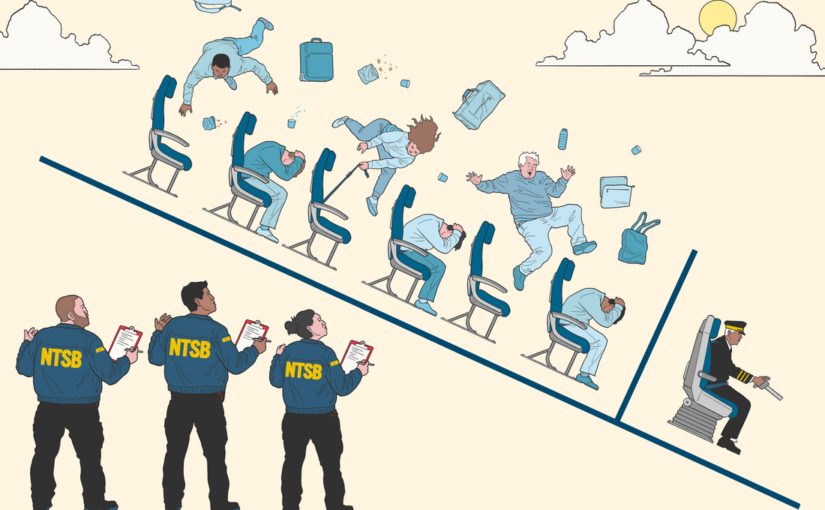
Midway through the flight, about two hours after takeoff, as the plane approached the western coast of Florida, a flight attendant with a service cart pulled up to the couple’s row and asked Turner what kind of snack she wanted. Banks was about to fall asleep. Turner was about to ask for Goldfish when the jet went into free fall. “There was a whooshing sound,” Turner says. “The plane just started falling.” The cart and the flight attendant lurched violently upward, the heavy cart pinning the woman against the ceiling.

Though Turner and Banks were wearing seat belts, they were only loosely fastened, and they also lurched upward, their heads smacking the panel above their seats. All around them, people and objects were flying through the air, hitting the roof inside the plane. Suspended above her seat, head jammed against the hard plastic amid the fan ducts and reading lights, Turner screamed and sobbed. “No, no, no, no, no!” she remembers saying. “What the fuck!”

Continue reading The Mysterious Case of the JetBlue Flight That Went Into Free Fall

A Civilian Plane Crashed in New Mexico. Was the Military’s Tech to Blame?

Drone warfare is making the skies more dangerous, even for airplanes far from the battlefield.

This article originally appeared in Wired magazine on July 30, 2026.

THIS PAST MAY, a twin-engine Beechcraft King Air medevac plane took off from Roswell, New Mexico, and headed west to the town of Ruidoso to pick up a patient. It shouldn’t have been a challenging flight for the two pilots and two nurses aboard. The temperature was 69 degrees; the sky was clear. The 60-mile journey normally takes a half hour, at most.

But once airborne, the plane ran into trouble. At the White Sands Missile Range that night, US military personnel were conducting a GPS jamming exercise that left the King Air pilots—and anyone else within hundreds of miles—unable to use modern navigation systems. Forced to revert to older technology, ones that they rarely if ever use, the medevac pilots got disoriented and crashed into the side of a mountain. There were no survivors.

The accident marked the first time that GPS jamming had contributed to the crash of a civilian plane in the United States. But it was just one of a string of recent disruptionsacross the world. The skies are more contested than ever, whether it’s civilian drones wandering out of the approved zone or US agencies getting their signals crossed, as happened earlier this year when New Mexico and Texas scared the public by temporarily closing their airspace. (It turned out that US Customs and Border Patrol were using anti-drone lasers in that area.) The GPS jamming exercise that led to this latest crash is not a singular event. In the past year, the US military appeared to have sent out notices for at least 10 such exercises. “As drone warfare and electronic warfare expand, airlines are increasingly encountering navigation disruptions hundreds of miles beyond the actual conflict zone,” says Eliran Almog, CEO of the cybersecurity firm Cyviation.

It’s worth taking a closer look at what happened last May. While the Ruidoso crash was the first fatal accident in the US known to be linked to electronic warfare, there’s no reason to think it will be the last.

Continue reading A Civilian Plane Crashed in New Mexico. Was the Military’s Tech to Blame?

The white-knuckle air show where landing 10,000 planes is just the start

Each year, amateur and stunt pilots alike descend on an otherwise quiet Midwestern tarmac for a high-flying extravaganza that appears to throw caution to the wind—except for a brilliant team of air-traffic controllers stepping into the chaos.

This article originally appeared in National Geographic on July 20, 2026.

For four and a half years, Paul Roberts, a 58-year-old nurse practitioner from Monroe, Louisiana, tinkered away in his garage, building a tiny, four-seat airplane from scratch. Then, one sunny day last July, he strapped in, took off, and flew 800 miles north, paralleling the course of the Mississippi River.

As Roberts soared over central Wisconsin, he spotted what he was looking for: a swarm of small aircraft, arriving from every direction, forming a 30-mile-long conga line in the sky that stretched eastward toward the city of Oshkosh. Roberts found a place and joined in.

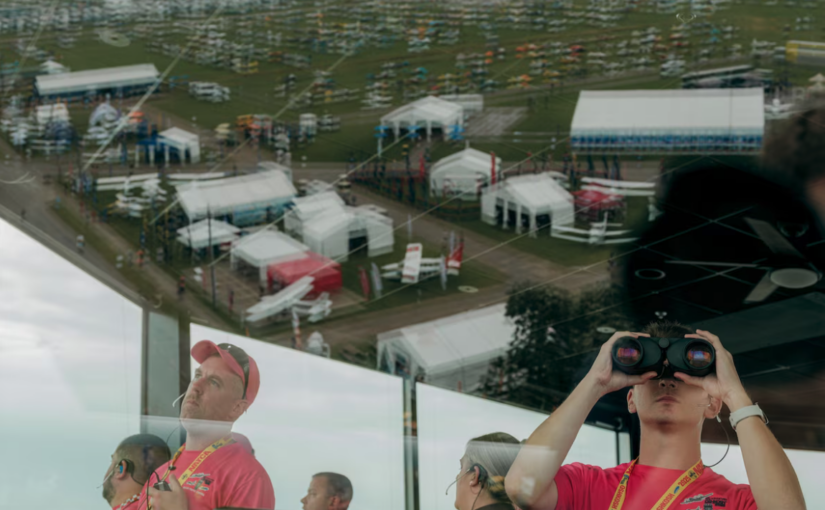
He was taking part in the world’s greatest annual migration of aircraft, in which roughly 10,000 planes converge on Oshkosh, Wisconsin’s Wittman Regional Airport each July for the Experimental Aircraft Association’s AirVenture show—commonly known as Oshkosh. The week-long event transforms an open Midwestern field into a pop-up city that sprawls across hundreds of acres and draws half a million visitors who’ve come to collectively bask in the roar of engines, the aroma of exhaust, and the spectacle of flying machines swooping across the summer sky.

Over the span of a few days, Wittman becomes the busiest airport in the world, and an elite squad of air traffic controllers must carefully coordinate arrivals, departures, and a series of high-octane aerial performances by skilled display pilots. It is the most precisely choreographed ballet of steel, aluminum, and jet fuel on earth. The action ramps up as the week progresses, and the stakes are tremendous. With so many jets in the sky and so many people on the ground, one wrong move could end in catastrophe.

Continue reading The white-knuckle air show where landing 10,000 planes is just the start

A New Clue From the Night MH370 Vanished May Radically Change the Search for the Missing Plane

What if the ocean heard Malaysia Airlines Flight 370 crash—and everyone missed it? An exclusive investigation reveals a long-hidden scientific report that could reshape the hunt for the airliner, 12 years later.

This article orginally ran in Popular Mechanics on July 16, 2026.

JEAN-YVES ROYER COULDN’T STOP thinking about what his underwater microphones might have heard.

It was March 2014, days after Malaysia Airlines Flight 370 took off from Kuala Lumpur for Beijing and mysteriously vanished into the night with 239 people on board. Investigators would soon come to believe the Boeing 777 had flown south and crashed somewhere in the southern Indian Ocean, and searchers were urgently looking for the plane’s black boxes. But Royer, a scientist at the French government research organization CNRS, knew that something else was already waiting in those waters, potentially recording the sound of the airliner’s final moments: his network of autonomous hydrophones.

The network was called OHASISBIO, a French acronym meaning the Hydroacoustic Observatory of Seismicity and Biodiversity. Just weeks before MH370 disappeared on March 8, Royer’s team had moored hydrophones at six sites in the southern Indian Ocean, from the waters near Crozet and Kerguelen to the Madagascar Basin and the Southeast Indian Ridge. They were built to continuously record the ocean’s low-frequency sounds, including submarine earthquakes, volcanic eruptions on the seafloor, the calls of baleen whales, icequakes, ice tremors, and the background noise of a vast ocean in motion.

Now, Royer realized, they might also have captured something they were never designed to detect: the sound of a missing commercial jet hitting the sea.

The catch? He couldn’t listen yet.

Royer’s hydrophones didn’t stream their recordings back to shore. They were autonomous instruments moored far from land, storing recordings internally as they listened through the months after MH370 disappeared. Before Royer could search for the acoustic trace of a possible crash, he had to wait for the buoys to finish their mission, release from their moorings, and return to the surface in January and February 2015. Only then could his team recover them, download the recordings, and search the audio for the hours after MH370’s final satellite transmission for a sound loud enough to have come from a Boeing 777 hitting the Indian Ocean.

Continue reading A New Clue From the Night MH370 Vanished May Radically Change the Search for the Missing Plane

Can the Aral Sea be reborn?

A generation ago, the vanishing of the Aral Sea became global shorthand for environmental desolation. Today the region has become a test bed for a resilient future.

This article originally ran in the May, 2026 issue of National Geographic.

It was the first human-made ecological disaster of the modern era.

In 1960, the Aral Sea was the world’s fourth largest lake, a rich and productive ecosystem teeming with carp, bream, and other species—by one estimate, it provided a sixth of all fish consumed in the Soviet Union. Hundreds of feet deep and hundreds of miles across, the sea was a world unto itself for the people who lived and fished on its shores and for the sailors who crossed it.

But change was coming. In 1968, Pravda, the official state newspaper of the Soviet Union, carried a story with an astonishing prophecy. This world would soon vanish, it said. Already the water level had started to fall, and it would fall further, its edges creeping away from the fishing towns on its shores, the lake bed changing to desert. By the turn of the century, “essentially, the Aral Sea will no longer exist.”

There was no magic behind the prophecy—just math. In the preceding years, Soviet officials had built large-scale irrigation projects that diverted the Amu Darya and Syr Darya, the rivers that fed the Aral Sea, into cotton production. Without their inflow, there was nothing to replace the water lost naturally through evaporation. For a brief time, the region enjoyed the best of both worlds: the lake, with its productive fisheries and mild climate, and the cotton industry, with the hard cash it earned. But as the rivers turned away, the lake shrank and shrank to less than 10 percent of its mid-century footprint, leaving behind a salt-encrusted desert.

The prophecy had been duly engineered: The Aral Sea as such no longer existed. “From an environmental perspective, it was a huge mistake,” says Bulat Yessekin, an environmental policy expert who spent decades working on Central Asian water access issues with international nonprofit groups.

Today the Aral Sea stands not only as a worldwide symbol of catastrophe but also as the first domino to fall in a freshwater crisis. Iran’s Lake Urmia has also shrunk over the past half century by 90 percent, as has Lake Chad in Central Africa. In the United States, the Great Salt Lake in Utah has become so salty because of water loss that its brine shrimp are at risk of dying out. All these crises are tied together with the pressures of human population growth and climate change.

But some conservationists are now looking to the fate of the Aral Sea and asking another question: If humanity can create ecological disaster, can we also undo it?

Continue reading Can the Aral Sea be reborn?

A Manned NASA Rocket Is About to Take Off for the Moon. There Are Questions About Its Safety.

A heat-shield expert has major worries about Artemis II.

This article appeared in New York magazine’s Intelligencer section on March 31, 2026.

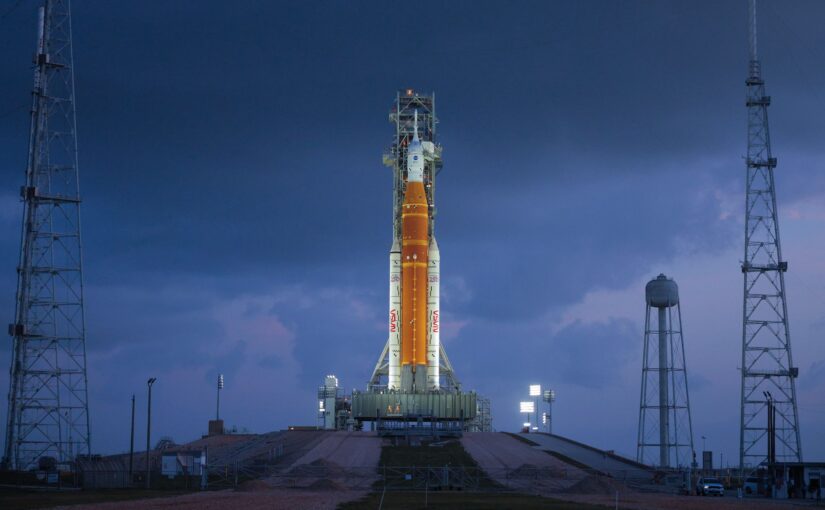
Some time during the first week of April, a 322-foot NASA rocket is scheduled to blast off from the Kennedy Space Center and soar deep into outer space, carrying its crew of four astronauts farther from Earth than humans have been in half a century. The Orion space capsule will loop around the moon, passing within 5,000 miles of the cratered surface, and then return to Earth. Turning its heat shield to the upper atmosphere, it will use aerodynamic braking to slow from a speed of 25,000 mph to just 300 mph, at which point it will deploy parachutes and splash down in the Pacific. Humanity will have returned to the moon and come home safely again.

That’s what NASA’s experts say will happen, anyway.

A guy on the internet disagrees.

Charles Camarda, a 73-year-old retiree living in Virginia, has been posting on LinkedIn and X, saying NASA has miscalculated and the Artemis IIrocket could fail catastrophically. To be clear, he is one guy, posting as a private citizen, with no institutional backing and no notable public figures standing by his side. It’s just him, one of a bazillion lone voices on the internet trying to set the world straight.

But one thing is different about Camarda that sets him apart from all those other dudes and makes his quixotic quest worth paying attention to: There is not a single person on Earth more qualified on this particular subject than he is.

“People need to listen to Charlie because he knows what he’s talking about,” says Eileen Collins, the former astronaut who made history as the first female commander of a space-shuttle mission. “He’s a high-integrity person, and his technical background is very deep.”

Continue reading A Manned NASA Rocket Is About to Take Off for the Moon. There Are Questions About Its Safety.

‘Love Story’ Got JFK Jr’s Final Flight Wrong in So Many Ways

This story appeared in New York magazine’s Vulture section on March 30, 2026.

The FX miniseries Love Story, about the tempestuous relationship between John F. Kennedy Jr. and Carolyn Bessette, is bracketed by the story of their final, fatal flight to Martha’s Vineyard in 1999. The first episode begins with them boarding the plane and taking off on a summer afternoon; the final episode revolves around the events of that flight and its impact on their loved ones and the public. It’s a crucial episode, both in their real lives and in the plot of the show. But is it accurate? Well …

The show does get the rough outline of the incident right. John did indeed attempt to fly his personal Piper Saratoga from an airport in Caldwell, New Jersey, to Martha’s Vineyard and then to Hyannis, Massachusetts. Onboard with him were Carolyn and her sister Lauren. They took off at 8:40 p.m. on July 16 and headed east, following the Connecticut coast. Then, over the ocean west of Martha’s Vineyard, John became spatially disoriented and lost control. After the plane failed to arrive, search parties set out to look for them. The wreckage and the three bodies were found four days later.

While the overall arc of the narrative matches the details laid out in the official crash investigation carried out by the National Transportation Safety Board, much of what’s shown onscreen is creative license, since there was no cockpit voice recording of what happened during the flight. Other details are simply inaccurate. Here are the significant errors.

Continue reading ‘Love Story’ Got JFK Jr’s Final Flight Wrong in So Many Ways

Here’s How the Fatal La Guardia Collision Happened, Second by Second

This article orginally appeared in New York magazine on March 23, 2026.

Shortly before midnight on Sunday, Air Canada Express Flight 8646, a Canadair CRJ-900 operated by Jazz Aviation LP, collided with a firetruck after landing at New York’s La Guardia Airport.

Publicly available audio of air-traffic-control radio communications with planes and ground equipment, as well as visual playback of automatically reported aircraft positions and speed, make it possible to determine the exact sequence of events that led to the crash.

10:23 p.m.: The Air Canada Express flight, bearing the flight number AC8646 and the air-traffic call sign “Jazz 646,” takes off from Montreal carrying 72 passengers and four crew members.

10:40 p.m.: United Airlines 2384, a 737 MAX headed for Chicago, is taking off from La Guardia Runway 13 when the flight crew decides to abort the takeoff due to a warning light. It taxis back to the end of the runway and tries again 18 minutes later, then aborts the takeoff a second time at 11:19. The plane, which at this point is on the eastern side of the airport, then taxis a short distance away from the runway and reports that an odor in the cabinhas caused flight attendants to feel ill. A fire truck is dispatched from the airport fire station, located on the western side of the airport.

11:33 p.m.: The Air Canada flight, descending through 3,000 feet over Bay Ridge, Brooklyn, turns left and lines up to land on Runway 04 at La Guardia. A light rain is falling, and a light wind is blowing from the northeast.

Continue reading Here’s How the Fatal La Guardia Collision Happened, Second by Second

We’re in a New Kind of War

This article originally appeared in New York magazine on Wednesday, March 11, 2026.

At the opening of the air war against Iran, the U.S. and Israel won a massively one-sided victory that left Iran’s defenses in tatters and much of its leadership dead. “We achieved air superiority within two days, if that,” says Mark Gunzinger, an analyst at the Mitchell Institute for Aerospace Studies. But just because a war starts well doesn’t mean it will end that way. “The enemy gets a vote,” as former secretary of Defense James Mattis liked to say.

Within hours of the opening salvos, Iran responded with barrages of its own, though of a different nature. Its air force neutralized, Iran turned to waves of ballistic missiles, cruise missiles, and drones. Though these were cheap and lo-fi compared with U.S. weapons, the Iran counterstrike took a surprisinglypainful toll with a single drone killing six American soldiers at a base in Kuwait. Amid the confusion, a Kuwaiti F-18 fighter jet reportedly shot downthree U.S. F-15 fighters, the most ever lost in combat. By the second week of the conflict, Iran had also destroyed some of America’s most sophisticated radar systems, each of which costs $500 million, and taken down 11 hi-tech Reaper drones with a total cost of $330 million.

At the same time, Iran was going after civilian targets in the region, raining down drones and missiles day after day on Israel, Bahrain, Kuwait, Saudi Arabia, Qatar, and the United Arab Emirates. In addition to targeting U.S. military bases in those countries, it went after critical oil-production facilities, desalination plants, data centers, and logistics hubs like airports. On Tuesday, the UAE shut down the Ruwais oil refinery, one of the largest in the world, following an Iranian strike. Iran’s most impactful measure has been to shut down the Strait of Hormuz, which sent oil prices soaring around the world.

In short, while Iran has been all but helpless at the game the United States and Israel were playing, it has a playbook of its own: dragging the U.S. into a type of warfare very different from any it has faced directly. This new kind of battle space, which has evolved at hyperspeed during the four years of war in Ukraine, effectively tips the playing field in favor of the underdog. “The Iranians had a plan all along, and now they’re going out and doing the plan,” says retired F-16 fighter pilot John Waters. “They’re striking back.”

Continue reading We’re in a New Kind of War

The Latest MH370 Search Implies Something Unusual Happened

This article originally appeared in New York magazine on December 3, 2025.

The on-again, off-again search for the wreckage of the Malaysian airliner that went missing 11 years ago is back on. On Wednesday, the country’s transportation ministry announced that marine-survey company Ocean Infinity would begin scanning the Indian Ocean seabed on December 30, with the project set to take 55 days, conducted “intermittently.”

MH370, which took off from Kuala Lumpur on March 8, 2014, was scheduled as a red-eye flight to Beijing and carried 239 passengers and crew members. But the Boeing 777 went electronically dark 40 minutes into the flight, and mysterious satellite communications signals later indicated that it had flown to a remote area of the southern Indian Ocean before evidently crashing. Only a few dozen pieces of debris have ever been found.

The new search appears to be a continuation of an effort Malaysia first announced last November, when it said Ocean Infinity would be searching about 6,000 square miles under the terms of a “no find, no fee” deal that would see Malaysia pay the company $70 million only if it found the plane’s wreckage.

Continue reading The Latest MH370 Search Implies Something Unusual Happened